What Is Sorbitol and Why Is It Important?
Understanding Sorbitol as a Functional Ingredient
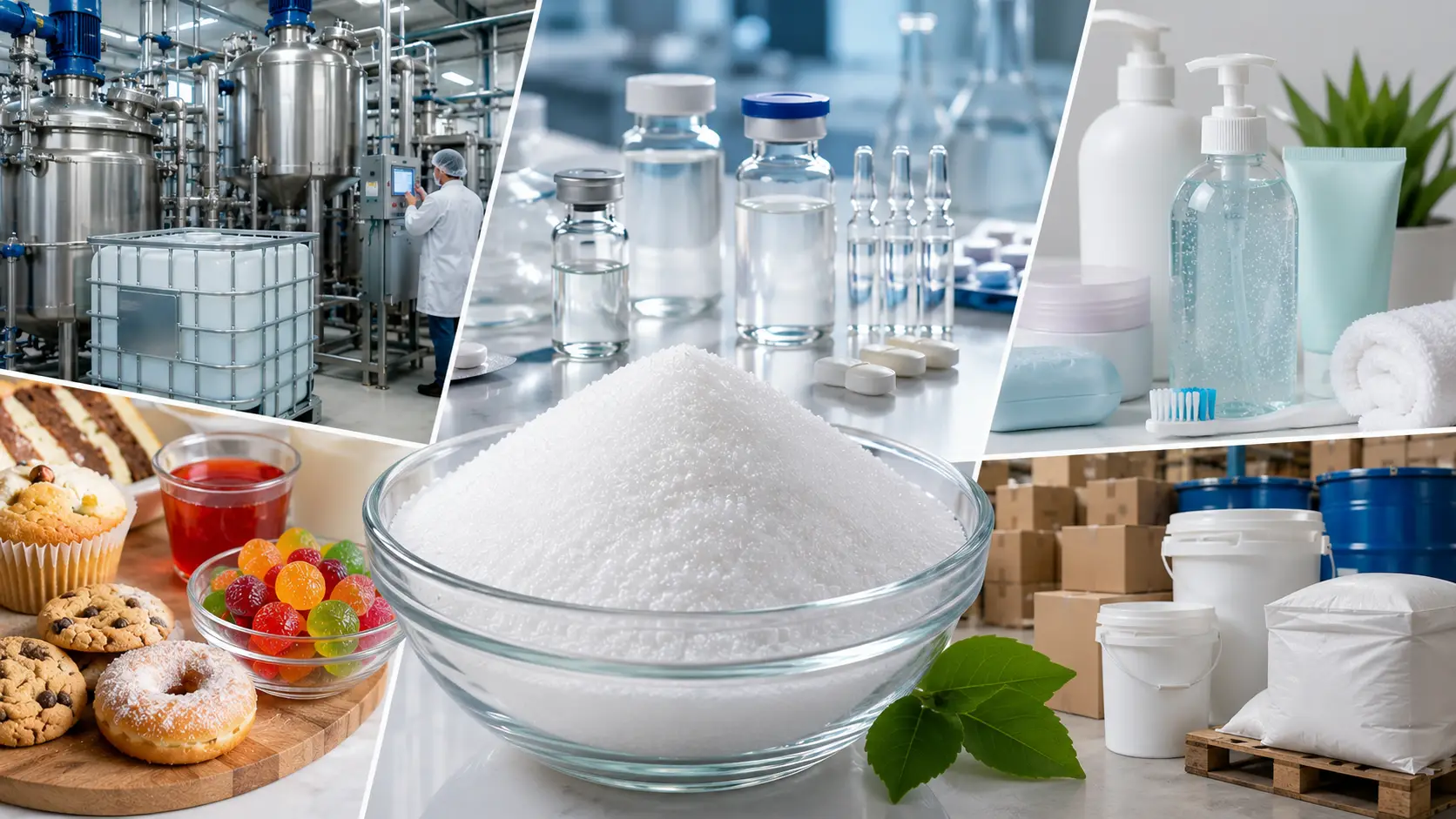
Sorbitol is a sugar alcohol (polyol) widely used as a multifunctional ingredient across food, pharmaceutical, and personal care industries. In its liquid form, identified as E420(ii), sorbitol serves as a sweetener, humectant, stabilizer, and texturizing agent. Its ability to retain moisture while providing sweetness with fewer calories than sucrose makes it a valuable ingredient for manufacturers responding to changing consumer preferences.
Manufacturers increasingly rely on sorbitol because it contributes to product stability, shelf-life extension, and desirable texture without significantly affecting flavor profiles. These characteristics have made it an essential formulation ingredient in sugar-free confectionery, baked goods, chewing gum, oral care products, cough syrups, and cosmetic formulations. According to the European Food Safety Authority (EFSA), sorbitol (E420) remains an approved food additive when used within established regulatory requirements, supporting its broad commercial adoption.
Why Sorbitol Matters Across Industrial Supply Chains
Beyond its functional properties, sorbitol has become an important ingredient within global manufacturing supply chains. Food processors seek consistent ingredient performance, while pharmaceutical and cosmetic manufacturers require reliable quality standards that support regulatory compliance and product consistency. As product formulations become increasingly sophisticated, ingredients capable of serving multiple technical purposes continue to gain commercial importance.
The growing emphasis on sugar reduction initiatives, functional ingredients, and clean formulation strategies has strengthened demand for sorbitol across international markets. Technical information published by the Food and Agriculture Organization (FAO) and the Joint FAO/WHO Expert Committee on Food Additives (JECFA) recognizes sorbitol as a well-established food additive with defined specifications, reinforcing its role in modern ingredient manufacturing and international trade.
Growing Industrial Applications of Sorbitol
Food and Beverage Manufacturing
Food manufacturers represent one of the largest consumer groups for liquid sorbitol. The ingredient functions as a sweetener, moisture-retaining agent, and bulking component in confectionery, bakery products, beverages, frozen desserts, and processed foods. Its moisture management properties help preserve texture and extend product freshness, making it particularly valuable for products with extended shelf-life requirements.
Demand has expanded alongside consumer interest in reduced-sugar and sugar-free product categories. Sorbitol also provides formulation flexibility because it contributes sweetness while supporting product stability during processing and storage. According to the International Food Information Council (IFIC), consumer demand for reduced-sugar products continues to influence ingredient innovation, encouraging manufacturers to incorporate alternative sweetening systems into new product development.
Pharmaceutical and Personal Care Applications
In pharmaceutical manufacturing, sorbitol is commonly used as an excipient in oral syrups, chewable tablets, vitamin formulations, and medicinal preparations. Its pleasant taste profile, compatibility with active ingredients, and humectant characteristics make it suitable for formulations requiring both stability and patient acceptability. Pharmaceutical companies also value suppliers capable of delivering consistent quality and documented compliance with applicable specifications.
The personal care industry similarly benefits from sorbitol's moisture-retaining properties. Toothpaste, mouthwash, skin creams, lotions, and cosmetic products frequently incorporate sorbitol to improve texture, maintain hydration, and enhance product performance. According to technical resources published by the Personal Care Products Council and ingredient guidance from Cosmetics Europe, multifunctional humectants continue to play a significant role in cosmetic formulation as manufacturers pursue performance, stability, and consumer satisfaction.
Market Trends Driving Global Sorbitol Demand
Expanding Demand Across Global Manufacturing Industries
Global demand for sorbitol continues to grow as manufacturers respond to changing consumer preferences, evolving food regulations, and increasing interest in functional ingredients. The food and beverage sector remains the largest consumer, particularly for reduced-sugar confectionery, bakery products, dairy alternatives, and functional beverages. At the same time, pharmaceutical and personal care manufacturers are increasing their use of sorbitol to improve product stability and formulation performance. According to the Organisation for Economic Co-operation and Development (OECD) and the Food and Agriculture Organization (FAO), long-term growth in processed food production and value-added ingredient consumption continues to support demand for multifunctional ingredients such as polyols.
Asia-Pacific has emerged as one of the most dynamic regions for sorbitol consumption due to expanding food manufacturing capacity, rising disposable income, and increased production of pharmaceutical and personal care products. Rapid industrialization in countries including China, India, Indonesia, Thailand, and Vietnam has encouraged investment in ingredient manufacturing and regional supply chains. These developments create new opportunities for suppliers, distributors, and procurement teams seeking dependable sourcing partners capable of serving multiple industries.
Supply Chain Priorities and Market Outlook
Recent years have highlighted the importance of resilient chemical and ingredient supply chains. Procurement professionals increasingly evaluate suppliers based not only on pricing but also on production reliability, inventory availability, logistics capabilities, regulatory documentation, and long-term partnership potential. Manufacturers are placing greater emphasis on supplier diversification to reduce the risks associated with transportation disruptions and fluctuating raw material costs.
Market analyses published by organizations such as Grand View Research and Fortune Business Insights indicate that the global sorbitol market is expected to maintain steady growth, supported by expanding food processing, pharmaceutical production, and personal care manufacturing. While regional demand patterns may vary, the overall market outlook remains positive as companies continue investing in healthier product formulations and high-performance functional ingredients that deliver both technical and commercial value.
Buyer Intent and Procurement Considerations for Sorbitol
What Industrial Buyers Evaluate Before Purchasing
Purchasing sorbitol is typically a strategic decision involving procurement managers, quality assurance teams, research and development specialists, and production managers. These stakeholders evaluate product specifications, concentration, purity, regulatory compliance, manufacturing consistency, packaging options, and supply continuity before selecting a supplier. For many organizations, ensuring uninterrupted production is just as important as obtaining competitive pricing.
Buyers also assess whether suppliers can provide supporting documentation such as Certificates of Analysis (COA), Safety Data Sheets (SDS), and relevant food safety or quality certifications. Manufacturers operating in regulated industries require suppliers that can consistently meet both local and international quality standards. According to guidance published by the International Organization for Standardization (ISO), supplier qualification and quality management play an essential role in maintaining efficient manufacturing operations and reducing procurement risk.
Why Buyers Compare Suppliers
Industrial buyers rarely select suppliers based solely on cost. Instead, they compare sourcing partners according to product consistency, technical expertise, lead times, logistics capabilities, customer support, and responsiveness to changing market conditions. Long-term procurement strategies increasingly prioritize suppliers capable of maintaining stable inventories and supporting business continuity during periods of market volatility.
For organizations evaluating sourcing options, the Sorbitol product page provides valuable information regarding product specifications and industrial applications. Access to detailed product information helps procurement teams make informed purchasing decisions, compare suppliers more efficiently, and identify solutions that align with their production requirements and commercial objectives.
How to Source High-Quality Sorbitol for Industrial Applications
Selecting the Right Supply Partner
Sourcing sorbitol for industrial use involves more than comparing quotations. Procurement teams should evaluate a supplier’s manufacturing network, quality management systems, export capabilities, and ability to provide consistent product availability across multiple regions. Reliable suppliers help reduce operational risks by maintaining stable inventories, transparent communication, and documented quality standards throughout the supply chain.
Product traceability has become increasingly important as manufacturers strengthen supplier qualification programs. Businesses operating in the food, pharmaceutical, and personal care sectors often require suppliers to demonstrate compliance with applicable food safety and quality management systems while providing complete technical documentation. According to the Global Food Safety Initiative (GFSI), effective supplier verification contributes to stronger supply chain integrity and helps manufacturers manage quality and regulatory expectations across international markets.
Building Long-Term Procurement Value
Long-term sourcing strategies focus on total procurement value rather than short-term purchase price alone. Factors such as shipment reliability, flexible packaging options, technical support, responsive customer service, and global logistics capabilities can significantly influence production efficiency and overall operating costs. Working with experienced suppliers may also simplify inventory planning and reduce the likelihood of supply interruptions.
For companies seeking dependable sourcing information, the Sorbitol sourcing page offers product details that support supplier evaluation and procurement planning. Access to accurate technical information enables procurement professionals to compare sourcing options more effectively while identifying suppliers capable of supporting long-term manufacturing requirements in competitive international markets.
Commercial Opportunities Through Reliable B2B Supply Chains
Commercial Positioning for Manufacturers and Distributors
Sorbitol remains a commercially important ingredient because its versatility supports multiple high-growth industries with a single product. Food manufacturers use it to formulate reduced-sugar products, pharmaceutical companies depend on its functionality in medicinal formulations, and personal care producers value its humectant properties in everyday consumer products. This broad application base helps sustain demand across diverse market segments and reduces dependence on a single industry.
Manufacturers, distributors, importers, and chemical traders increasingly seek sourcing partners that can provide dependable supply, competitive commercial terms, and consistent product quality. According to market insights published by Mordor Intelligence, the continued expansion of processed food manufacturing, pharmaceutical production, and personal care markets is expected to support ongoing demand for multifunctional ingredients such as sorbitol.
Why Reliable Sourcing Matters in B2B Markets
Supply chain resilience has become a strategic priority for procurement organizations worldwide. Reliable sourcing partners help businesses minimize production downtime, manage inventory more effectively, and respond to changing customer demand with greater confidence. Strong supplier relationships also contribute to improved forecasting, more efficient logistics planning, and reduced procurement risk over the long term.
As a global B2B chemical marketplace, Tradeasia supports industrial buyers by connecting them with established sourcing solutions for food ingredients and specialty chemicals. Companies looking for detailed specifications and procurement information can also refer to the Sorbitol product page when evaluating sourcing opportunities. By combining market knowledge with reliable supply chain support, businesses can strengthen procurement strategies and build sustainable commercial partnerships.
Conclusion: Building Long-Term Value with Strategic Sorbitol Sourcing
Supporting Sustainable Procurement Decisions
Sorbitol continues to play an essential role across food, pharmaceutical, and personal care manufacturing because of its multifunctional performance and broad industrial applicability. As global demand for functional ingredients grows, procurement teams are placing greater emphasis on supplier reliability, regulatory compliance, and long-term supply chain resilience. These considerations help manufacturers maintain production efficiency while meeting evolving customer and market expectations.
Organizations that adopt strategic sourcing practices are better positioned to manage market fluctuations, secure consistent product quality, and optimize operational performance. Industry guidance from organizations such as the World Trade Organization (WTO) and international quality standards bodies highlights the importance of transparent, dependable supply chains in supporting global trade and manufacturing competitiveness.
Looking Ahead for B2B Buyers
For manufacturers, distributors, and procurement professionals, selecting the right sorbitol supplier involves balancing quality, technical capability, logistics performance, and commercial reliability. As demand continues to expand across multiple industries, businesses benefit from partnering with suppliers that understand both regulatory requirements and international supply chain dynamics.
Tradeasia's marketplace provides industrial buyers with access to sourcing information that supports informed procurement decisions and long-term business planning. Companies interested in exploring product specifications and supply options can visit the Sorbitol supplier information to learn more about sourcing solutions for food, pharmaceutical, and industrial applications.
Leave a Comment